
For programmers, remote workers, and streamers who spend 8+ hours at a desk, lighting is a health issue. If you finish your day with throbbing temples or dry, gritty eyes, the culprit might be the invisible flickering of cheap LED diodes.
The Danger of PWM (Pulse Width Modulation)
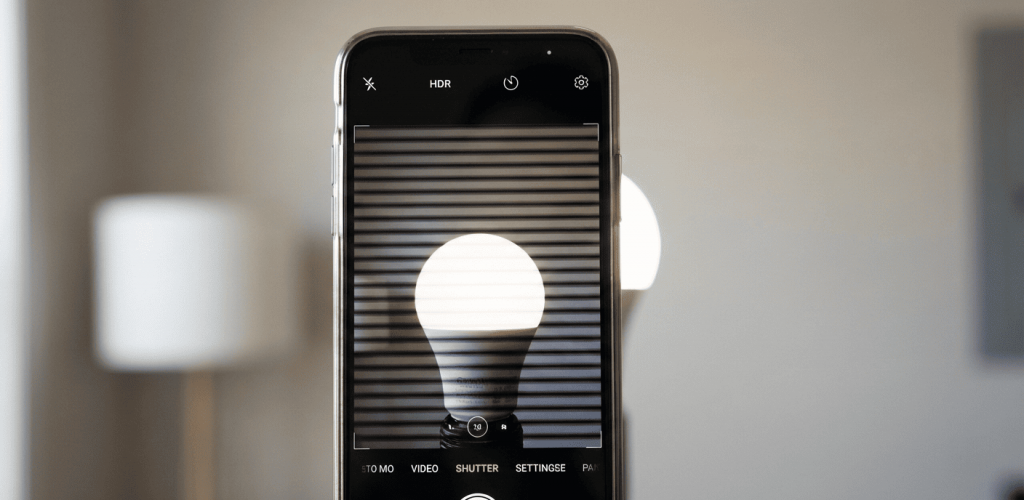
Many budget ring lights dim their brightness by flashing on and off thousands of times per second. This is called Pulse Width Modulation (PWM). While your conscious mind cannot see it, your brain and optic nerve register these micro-strobes, leading to rapid fatigue and headaches.
How to test your light: Open your smartphone camera and point it at your light source in “Slow Motion” video mode. If you see scrolling horizontal black bars, your light is flickering.
Why Soft Light is Healthier
Skytex bulbs are engineered to be “Flicker-Free,” providing a continuous stream of light. Furthermore, physics dictates that a larger light source is easier on the eyes. A point-source (like a naked bulb or thin ring) forces your pupil to constrict tightly. A diffused softbox creates a gentle wash of ambient light, reducing contrast and significantly lowering eye strain video lighting issues.
Correct Brightness & Bias Lighting
Never sit in a pitch-black room with a bright monitor. This high contrast causes severe strain. Use your Skytex light at a lower intensity to raise the ambient light level of the room (Bias Lighting), balancing the brightness of your screen and protecting your vision.