
If you search Amazon for “streaming gear,” the first lighting result is almost always a ring light. It has become the starter pack standard for new creators on TikTok and Twitch. It is cheap, easy to set up, and omnipresent.
However, as streamers upgrade their production quality, the ring light is usually the first piece of equipment to be discarded. While effective for specific close-ups, it often fails to deliver the professional look required for long-form content. To understand why, we need to look at how light shapes the face.
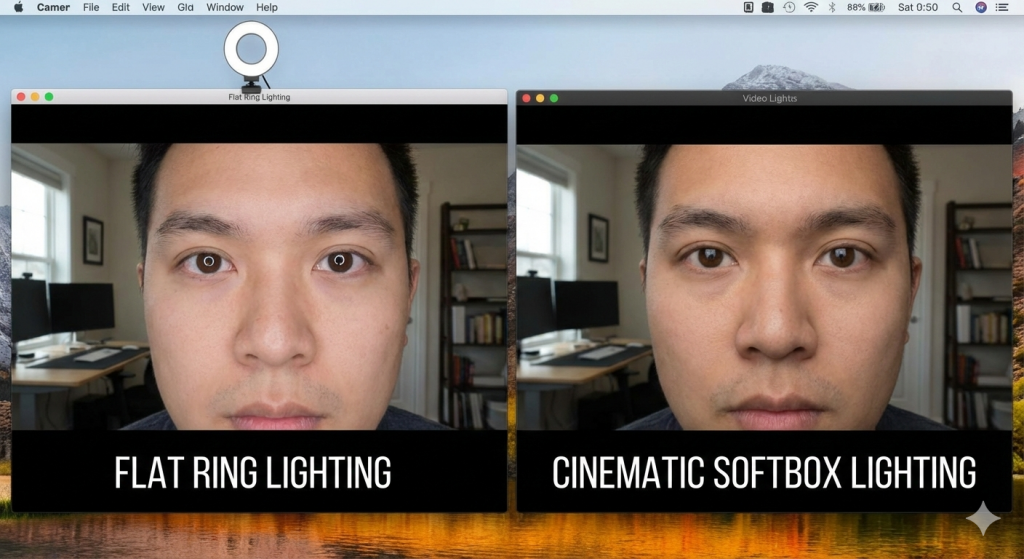
The “Flat Face” Effect
Ring lights were originally designed for medical and dental photography, not videography. Their purpose is to illuminate a subject evenly from all angles, eliminating all shadows.
While this sounds good in theory, it is detrimental to video aesthetics. This is known as flat lighting. Shadows are what give your face depth and dimension. When you blast light directly from the camera angle (on-axis lighting), you erase the natural contours of your nose, cheekbones, and jawline. The result is a two-dimensional look where your face appears wider and less defined than it actually is.
The Softbox Advantage: Cinematic Volume
If you look at top-tier streamers or YouTubers, their lighting setup almost always involves softboxes. The goal isn’t just to be seen; it is to look three-dimensional.
Shadows Create Shape
Unlike a ring light, a softbox is usually positioned off-center (typically at 45 degrees). This placement casts gentle shadows on the far side of the face. These shadows are essential—they carve out your features and separate you from your background. This creates the “cinematic” look that viewers associate with high-production value.
Skytex Diffusion vs. Harsh Diodes
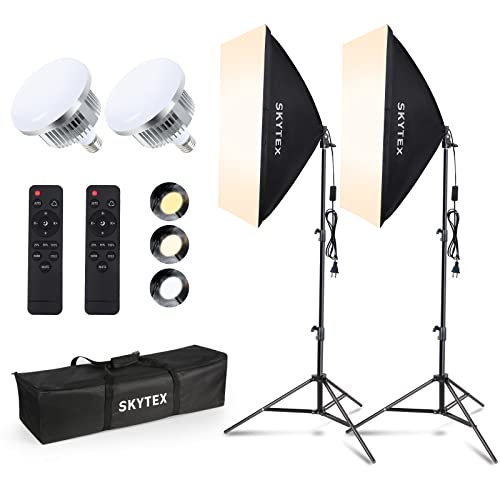
A ring light shoots light directly from exposed LEDs onto your skin. Even with a plastic cover, the light remains harsh. A Skytex softbox uses a double-diffusion layer system. The light bounces inside the silver-lined box and then passes through a white fabric screen. By the time it hits your face, the light wraps around your features rather than striking them, smoothing out skin texture without flattening your face.
Eye Comfort During Marathon Streams
Health is an overlooked factor in the softbox vs ring light debate. A serious Twitch stream or podcast recording can last 4 to 8 hours.
Sitting directly in front of a ring light means staring into a concentrated circle of LEDs for hours. This creates significant visual stress and can lead to “dazzle” (spots in vision) and headaches. Because a softbox has a much larger surface area (e.g., 50x70cm), the light intensity is spread out. It provides the same illuminance (brightness) on your face with significantly less glare hitting your retinas. For full-time creators, this reduction in eye fatigue is critical.
The Verdict
So, which is the best lighting for streaming? It depends on your platform.
- Ring Light: Best for TikTok makeup tutorials where you need to see pores clearly and shoot for less than 60 seconds.
- Softbox (Skytex): Essential for Twitch streaming, YouTube videos, and Zoom calls where you want a professional, flattering image and long-term eye comfort.
If you are ready to move away from the amateur “halo eyes” look and add depth to your video feed, it is time to switch to a softbox.
Upgrade your setup: Check out the Skytex LED Softbox Kit with adjustable brightness here.